In 1954, science fiction author Frederik Pohl imagined a future where technology had solved scarcity. The result was not utopia. It was something far stranger.
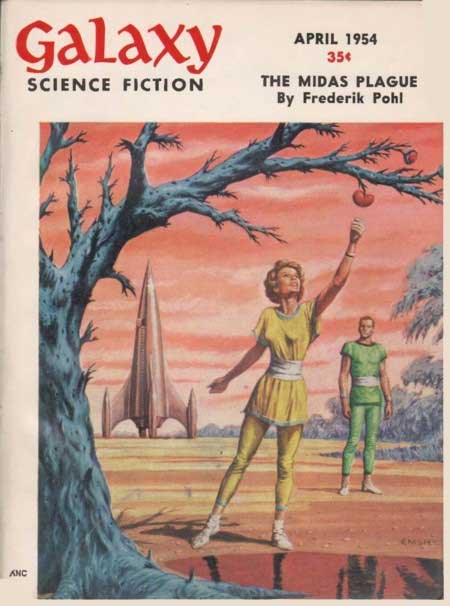
Every once in a while, you come across an old book or story that refuses to stay in the past.
I recently had that experience while reading Frederik Pohl’s The Midas Plague, a science fiction story first published in 1954. I picked it up expecting a glimpse into how writers of that era imagined the future. What I found instead was a story that seemed to be wrestling with questions that feel surprisingly familiar today.
At the center of the story is a man named Morey Fry. He lives in a future where technology has largely solved the problem of scarcity. Automated systems and robots produce an endless stream of food, clothing, entertainment, and consumer goods. The abundance is so great that society faces a problem that would have sounded absurd to earlier generations.
People are required to consume.
The economy depends on it.
Those who fail to use enough goods are viewed as irresponsible, while the wealthy carry the greatest burden because they are expected to consume the most. Morey spends much of the story struggling to keep up with the demands of a society drowning in abundance.
The premise is clever and often funny, but what stayed with me was not the satire. It was the underlying observation that every solution creates new problems. Human beings have spent most of history trying to overcome scarcity. We naturally assume that more abundance, more comfort, and more convenience will lead to greater happiness. Pohl imagined a future in which those goals had largely been achieved, then asked what might happen next.
Reading the story seventy years after it was written, I found myself thinking about the world we already inhabit. We are surrounded by information, entertainment, products, services, and distractions in quantities that previous generations could hardly imagine. Many of the challenges we face today are no longer rooted in a lack of access. Instead, they involve deciding what deserves our attention, what has value, and how to live meaningfully amid an endless stream of choices.
That does not mean Frederik Pohl predicted artificial intelligence in any literal sense. The technologies he imagined are very different from the ones shaping our world today. What he understood, however, was that technological success changes more than our tools. It changes our relationship to work, purpose, status, and one another. It changes the environment in which human beings search for meaning.
One reason the story resonated with me is that much of my own writing explores what happens when familiar assumptions begin to break down. Sometimes the disruption arrives through extraordinary experiences. Sometimes it arrives through loss, change, or events that force us to question what we thought we understood about ourselves and the world around us. In The Midas Plague, the disruption comes from abundance itself. The future arrives, delivers everything people thought they wanted, and then reveals that the deeper questions remain unanswered.
Perhaps that is why the story still feels relevant.
The details belong to another era. The social commentary, the imagined technologies, and even some of the humor carry the fingerprints of the 1950s. Yet beneath those details lies a question that seems as important now as it was then: What happens when human beings obtain everything they thought they wanted and discover that meaning cannot be manufactured, distributed, or consumed?
Good science fiction rarely succeeds because it predicts the future accurately. It succeeds because it reveals something enduring about the present. Frederik Pohl’s story does exactly that. Seventy years after its publication, The Midas Plague remains entertaining, thought-provoking, and surprisingly timely.
For readers who would like to experience the story themselves, I have prepared an Illustrated Reader’s Edition that preserves the original artwork while presenting the text in a more accessible format. I hope you’ll take the opportunity to read it and decide for yourself what questions it still has to ask.
About The Author